
We have heard it before: early years educators in England are low paid and undervalued. We usually discuss their pay in terms of hourly wage, but let’s look at this like with every other profession: by annual salary.
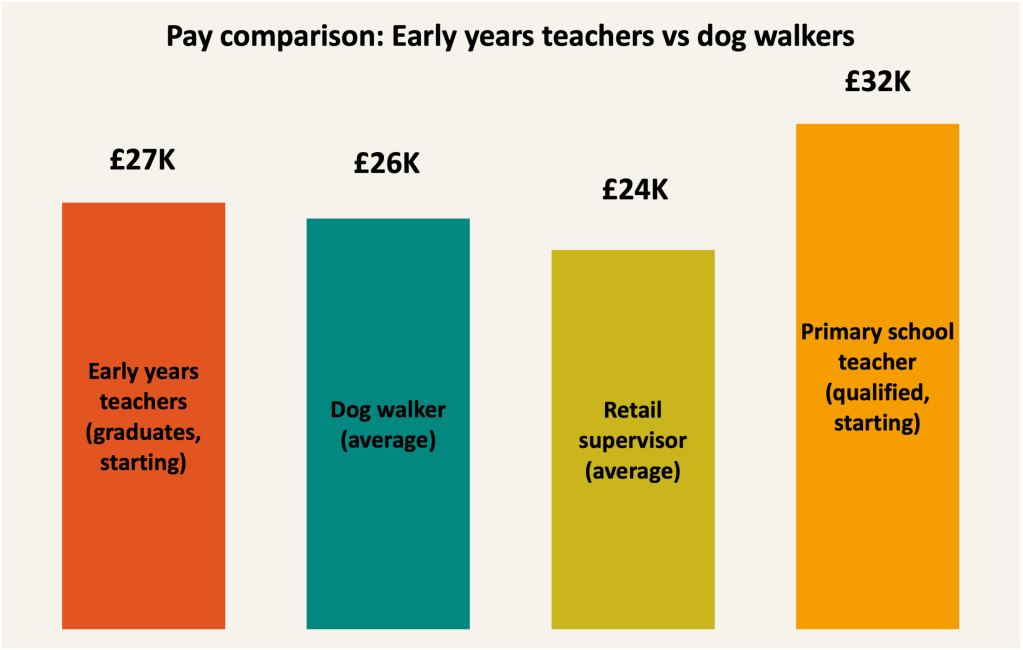
A graduate working full time in a nursery typically earns a starting salary of around £27,000 a year. That’s about the same as the average earnings for a dog walker. Yet these are the professionals trusted with the most formative years of a child’s life — shaping brain development, socio-emotional development, language, confidence and more.
There’s no single fix — but, as an example, two changes would go a long way:
- Wage supplements in areas of greatest need to reduce staffing shortages and regional inequity.
- Aligning early educator pay with similar roles, to ensure fairer benchmarks across the system.
The current recruitment and retention crisis is not driven just by low pay; but this isn’t just about pay either — it’s about respect, recognition and responsibility.
We say early education matters. But if we pay early educators the same as dog walkers — what are we really saying?
What other organisations have recommended
1. Introduce a Sector-Wide Minimum Pay Floor
TUC advocated for a new early years sector minimum wage — e.g. £15/hour — negotiated via a social partnership between unions, employers and government. This would cover pay, progression, working hours, sick leave, training leave, and staffing conditions, creating a foundation for long-term stability.
2. Establish Fair Pay Agreements
IPPR recommended extending sector-wide collective bargaining, similar to teaching and social care. These agreements would set national standards for pay, progression, and conditions — critical in a sector fragmented between public, private, and charity providers.
3. Apply Pay Benchmarks with Conditional Funding
Submissions to the Education Committee (House of Commons) highlighted research findings showing that school-based staff earn £8.43/hr vs £7.10/hr in PVIs, and urged the government to consider conditionality on funding, tying eligibility to fair pay levels, similar to model used in Ireland’s “First 5” initiative.
4. Introduce a Wage Board or Joint Labour Committee Model
The Joseph Rowntree Foundation proposed a regulated wage board (like Ireland) to set minimum pay by worker level, enforceable across all settings. This approach would allow pay standards to be set independently and fairly for early years practitioners.
 Sara Bonetti Research