
Qualifications matter — not just for compliance, but for confidence, capability and career progression.
Yet the situation seems different in early childhood education and care. Across England’s group-based providers, the data tell a clear story: most staff stop at Level 3 — and not because they want to.
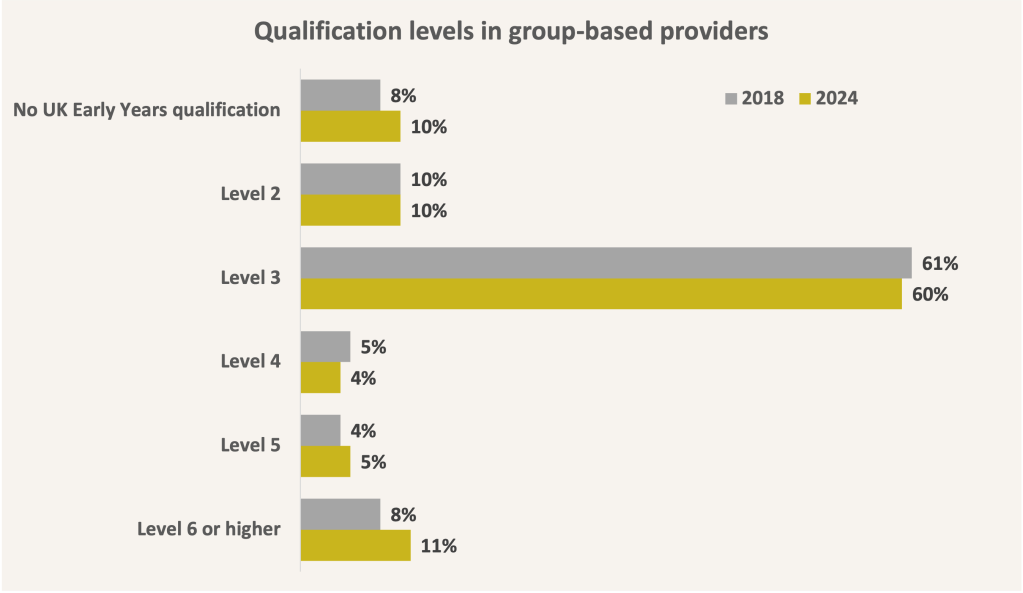
According to the Department for Education (2024):
- 60% of staff hold a Level 3 qualification.
- Only 20% hold anything higher.
- 1 in 5 have no recognised UK qualification or only a Level 2.
Why It Matters
In fields like teaching, nursing, or social work, qualification routes are structured, recognised, and linked to professional growth. You can see where you’re headed.
In early education, the path often disappears after Level 3.
There is no clear, supported route to leadership, specialisation, or deeper pedagogical training. In fact, the qualifications system has been through a decade of shifting policies, overlapping reforms, and unclear outcomes — from the Nutbrown Review (2012) to the rollout of Early Years Educator (EYE) criteria, T-Levels, and revised Level 6 routes.
The result? A system that often feels like it’s standing still — or worse, going in circles.
A Career Without a Ladder
When most of the workforce is clustered around one qualification level, it becomes hard to:
- recognise and reward deeper expertise
- support meaningful career progression
- build leadership capacity from within
- retain experienced practitioners who want to grow.
Worse still, a flat system sends a message — intentionally or not — that early years education doesn’t require, or deserve, further professional depth.
We know that’s not true. High-quality early education is complex, relational, and deeply skilled work.
What’s Next?
We need to offer more than entry points. We need to build a system that supports educators beyond Level 3 — with clear progression routes, leadership development, and qualifications that stack and count.
Because just like children need to grow, so do the people who teach and care for them.
 Sara Bonetti Research